CRITICAL MINERAL RECOVERY
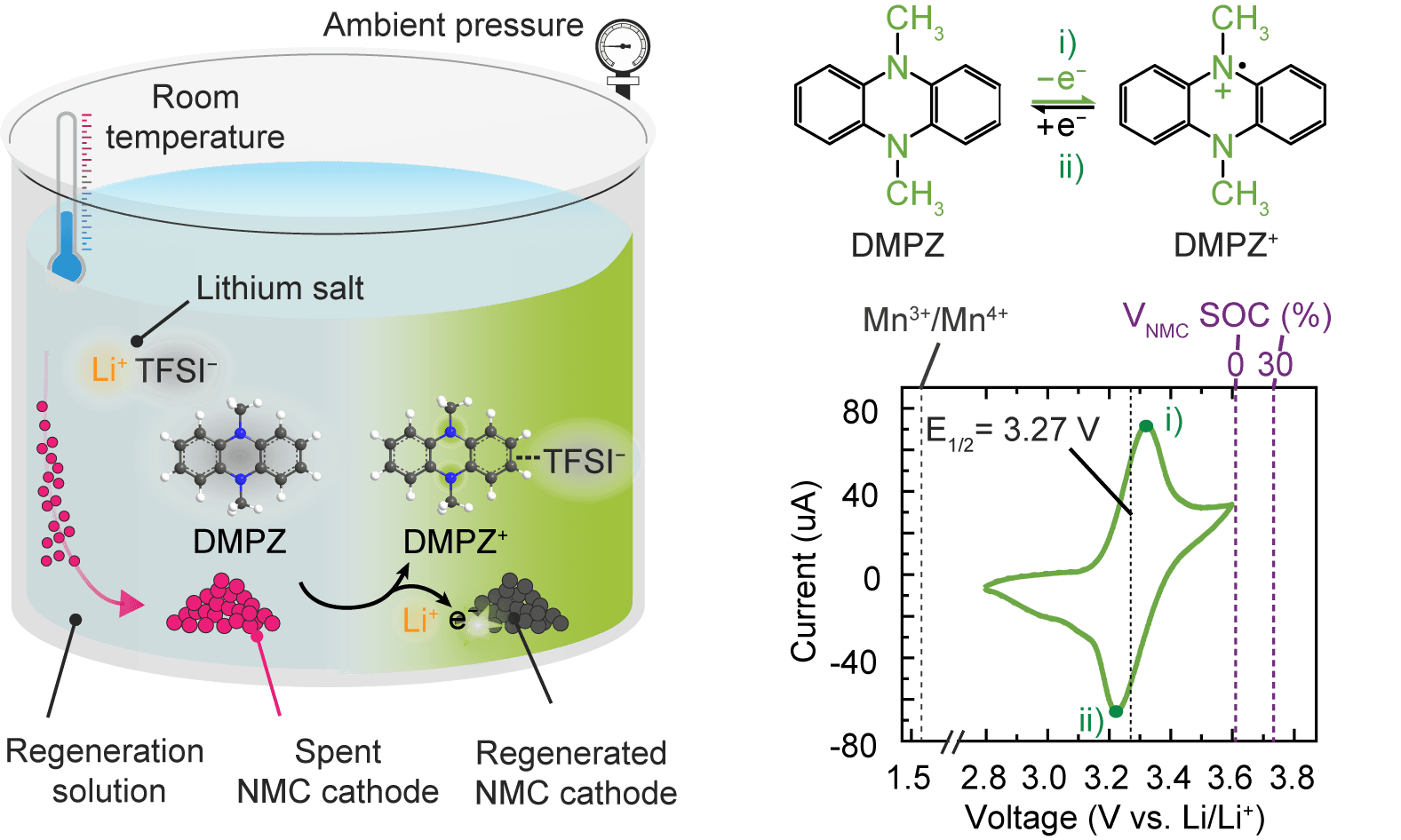

01 REGENERATE
Instead of smelting a spent cathode down to raw salts, I use molecular electron donors to reverse its damaged surface — restoring the material directly for reuse.
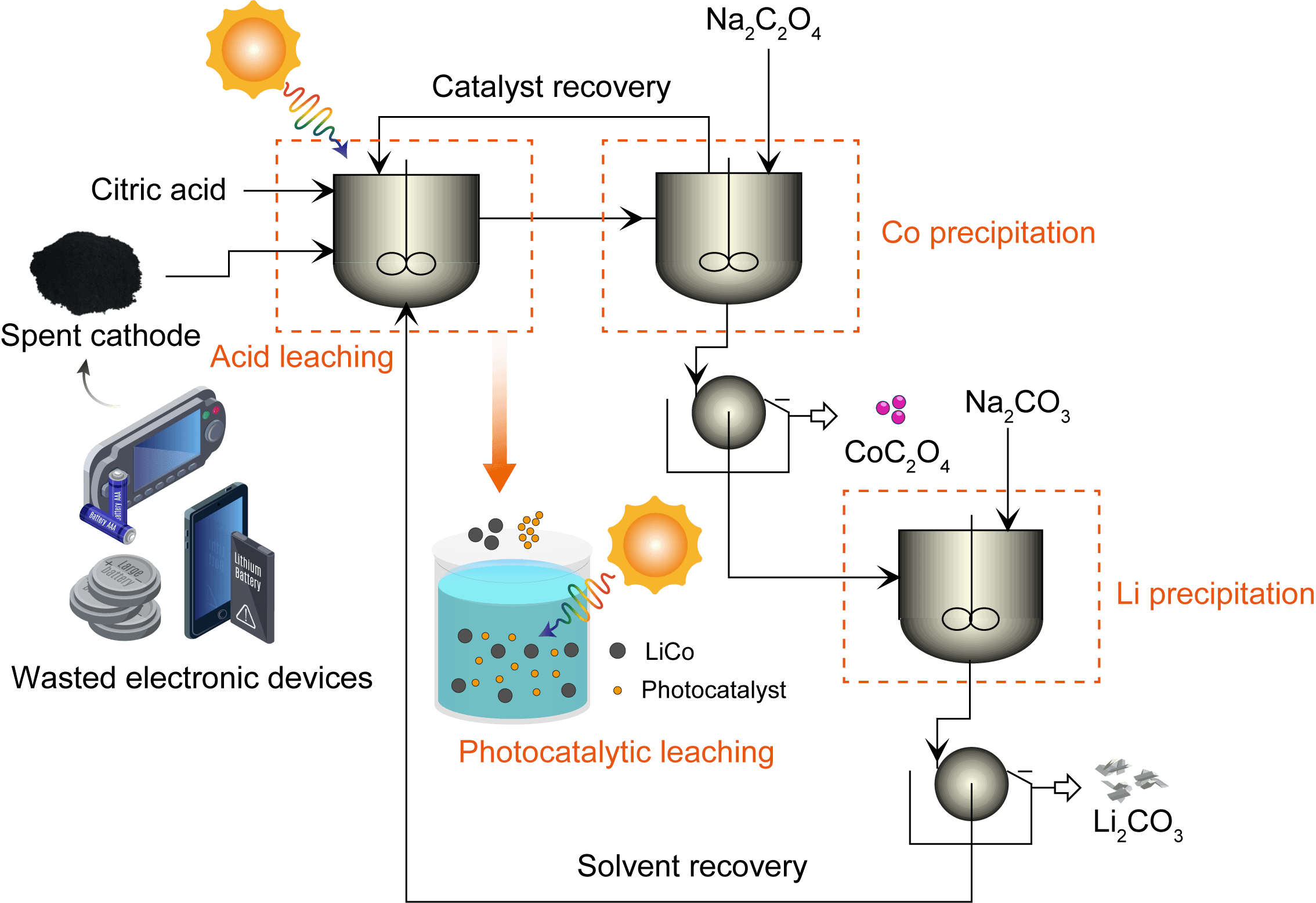

02 RECOVER
When the metals have to come out, I use light-driven (photocatalytic) chemistry to extract critical metals from spent cathodes under mild conditions.
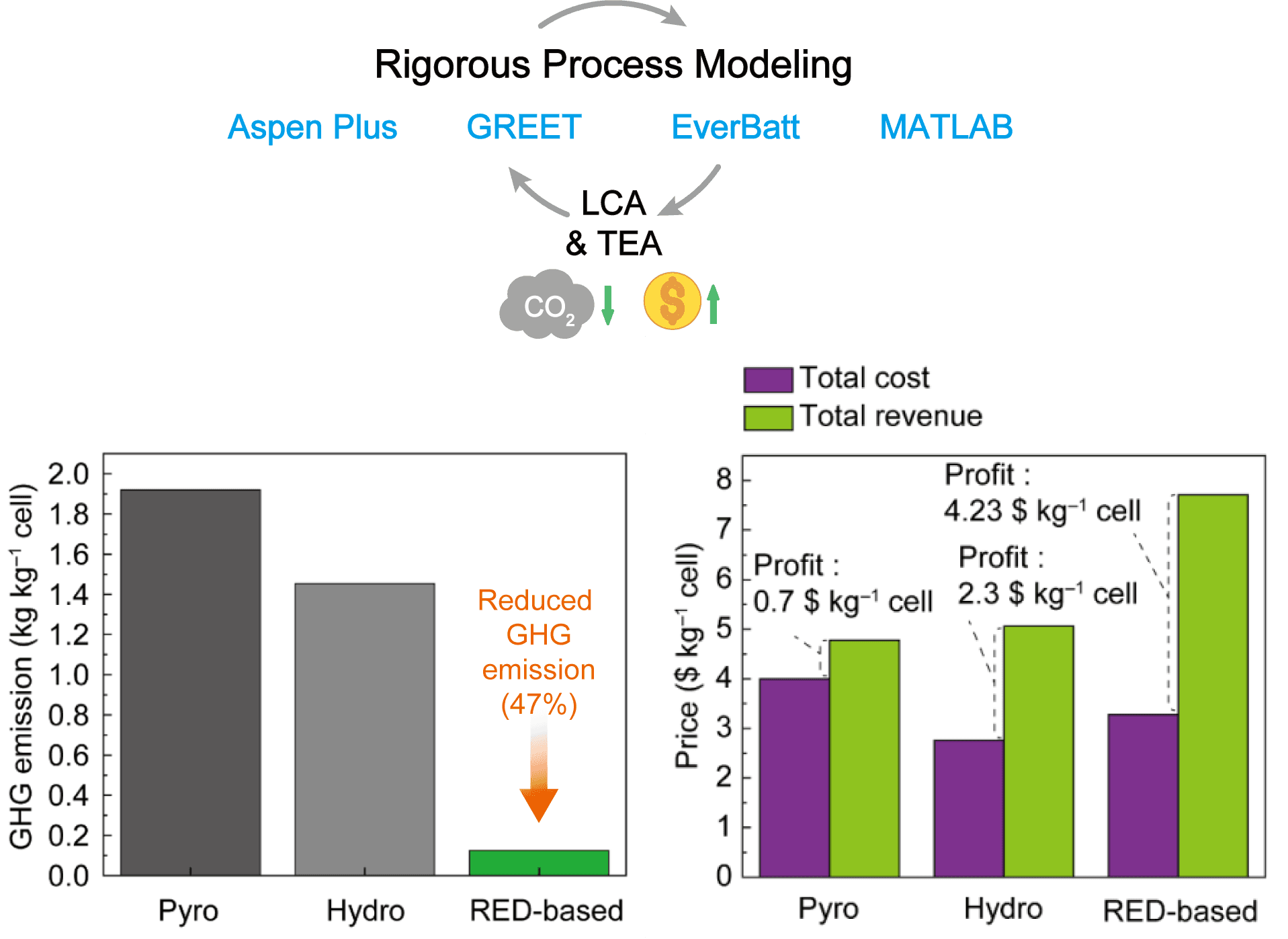


03 PROVE IT PAYS
Every route runs through techno-economic and life-cycle analysis — EverBatt, GREET, Aspen Plus — so the question is never only whether it works, but whether it pays and cuts emissions.
I don't stop at whether the chemistry works. I ask whether it scales, what it costs, and what it emits.
RELATED PUBLICATIONS
Energy & Environmental Science 2024, 17, 4064–4077 (Link)
Direct cathode regeneration via molecular electron donors, reversing rock-salt surface reconstruction
Recycling Technologies Driven by Redox Mediation
Accepted (Nature Communications)
Photochemical Cathode Recycling for Spent Lithium-Ion Batteries
Photocatalytic recovery of critical metals from spent battery cathodes